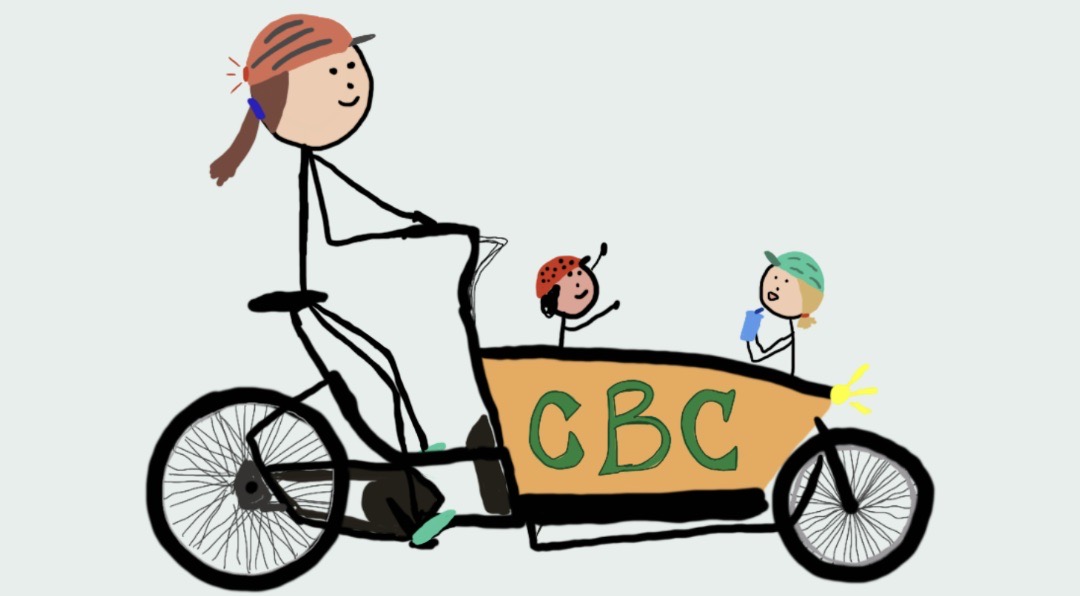
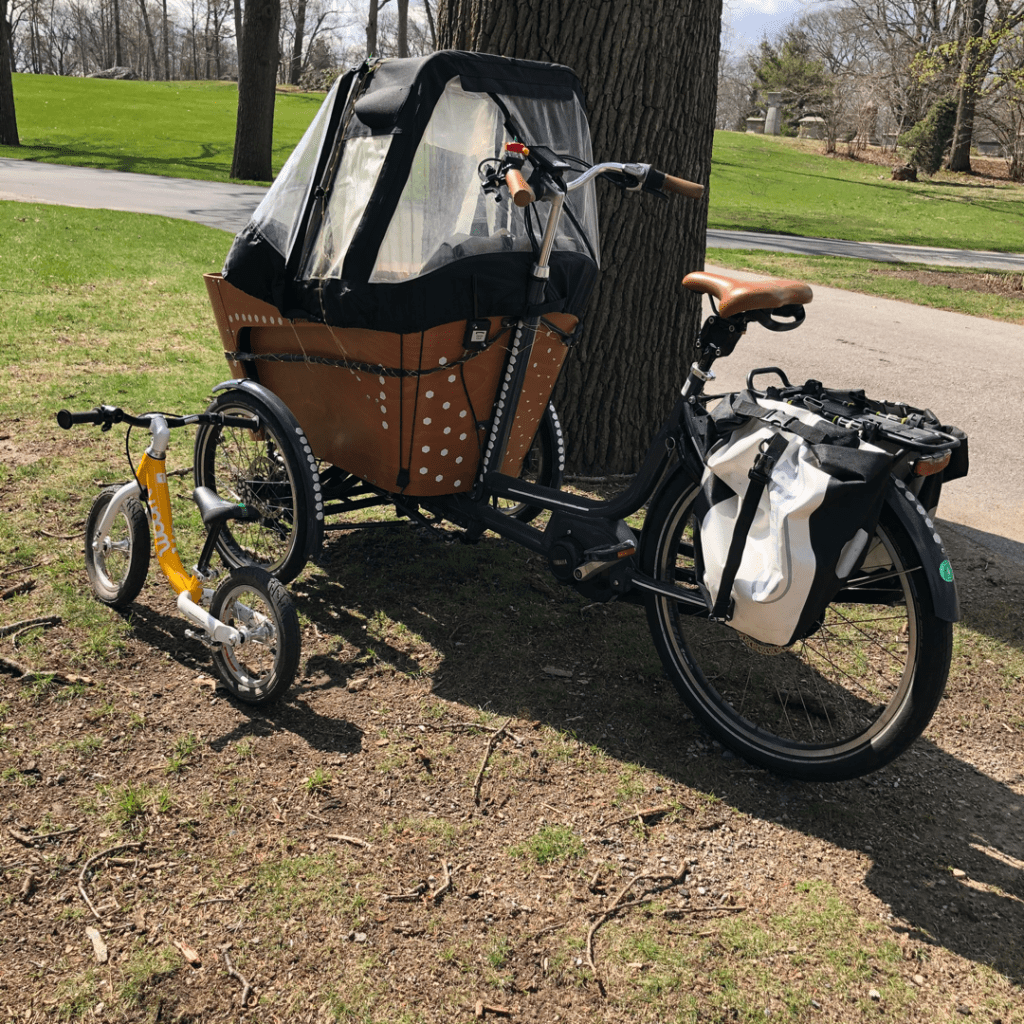
I’ve accumulated over 13,000 miles across the three different styles of cargo bike since I started riding in 2018. I started first with a trike (Babboe Carve), then a longtail (Yuba Spicy Curry) and now I’m onto a bakfiets/box bike (Urban Arrow).
You can certainly get lots of opinions on the different types of bikes. When it comes down to choosing which type of bike will be best for you, you’ll need to consider a lot of factors — what brands are available to you (will you buy something direct to consumer or do you want to go through your local bike shop), where you can get your bike serviced, what you intend to carry, the bike infrastructure in your community, and your own physical attributes and preferences (e.g., some bikes work better for taller/shorter riders, do you want an upright riding style or to lean forward, etc.).
Of course you should consider other people’s opinions, but muddling up the search are the voices of folks who have strong opinions about certain styles of bikes who have never actually owned the bike they’re talking about. I don’t represent any brands nor am I affiliated with a bike shop. Everything I’m sharing is my own opinion based on my own experiences. Of course, my experience is also limited to a bike shop owner. While I don’t have a financial interest in your decision, my experience is limited to three very specific bikes and brands.
One of the Biggest things I’ve learned is that it can take a full 80 miles until a bike feels normal.
Have you ever hoped on a friend’s bike and thought things felt off? Even when we’re riding normal bikes, it takes our bodies some time to adjust. This is why test rides around the block at the bike shop actually aren’t that helpful. None of my bikes felt great when I first road them. I’m not trying to dissuade anyone from ever taking a test ride — but look to it more for seeing if the bike’s geometry and sizing is a good fit for your body. Don’t expect to feel great after a test ride. If you’re really interested in a bike, see if you can borrow it for an extend period of time. Here in the Boston area we have the Camberville E-Bike Lending Library which allows you to borrow a bike for a full week to see how you like it. This is an incredible resource for those interested in cargo and ebikes!
Here are what I see as the pros/cons of trikes, longtails and box bikes (bakfietsen). I hope this serves as a good primer if you are just starting your bike search.
An Ode to the Trike
I’ll start with the trike — it was my first bike and I’ll always hold a soft spot for trikes. I also think trikes have way too many naysayers. Trikes initially feel the most unusual, so most of the trike opposition will come from the folks who test road a trike and hated it.

Instead of your bicycle tilting left and right as you do on a two wheeler, your trike will now be perpendicular to the road. No matter what. This feels weird (at first). Remember, you will get used to it. This is also where I got my 80 mile rule. After owning the bike and riding it for 80 miles, I realized that I no longer worried about the tilt of the road. It all felt completely normal.

Trike Pros:
-Stable at low speeds/stops
-Stable when children climb in/out/around/on/dangle/squabble/monkey around
-You can sit on the bike at stops without having to worry about balancing your load. This is an especially important consideration for our riders with a shorter stature.
-You can hop on/off and walk away from the bike quickly. Most trikes have a handlebar lock that engages the brake and locks it in place. I found this feature so useful when I had to pop off to push a crosswalk button or if my kids dropped something in the bucket and I needed to get close to them quickly.
-Big buckets — more space for passengers and stuff. You can fit 3+ kids more easily and comfortably in a trike.
-Safer riding in snow/rain/slipper conditions…my bike slid from time to time but I never felt in danger of tipping over. If I had put studded tires on it probably would’ve been a much better experience
-You can ride with kids in their carseats and begin cycling with a kid before they’re 1 year old (minimum age for sitting in a seat/wearing a helmet).
-Upright riding style. This is a big pro for me — It increases visibility of the bike and it increases your visibility of the road. Upright riding also works best for my wrists which are prone to carpal tunnel. Some folks don’t prefer upright riding, but I think it’s super useful when biking with kids.
Trike Cons
-Trikes are heavy, and so even with a motor, a lot of energy is invested in moving a heavy bicycle. My trike was 150lbs without added accessories, passengers and cargo. I advocate for electric assist, but I think it’s especially important on a trike. The reason I had to sell my trike is that the motor couldn’t ultimately keep up with our hills once we added a second kid/more weight to the bucket. If I had had a stronger motor, I would’ve been more than happy if the trike could’ve been our forever bike.
-I don’t even want to write this because YOU WILL GET USED TO IT, but a trike doesn’t feel ‘like how you’re used to bikes feeling ‘normal.’ There is an adjustment period.
-You can go up on two wheels and tip over if you take the turns too quickly. People tend to think that trikes are tip proof, but you do have to adjust your riding style. What feels weird in the beginning will eventually become second nature. You won’t even think about it and you’ll naturally take turns at a safe speed.
-Trikes are wide, potentially harder to navigate in traffic and into buildings. I will say I never had issues and when I ride with kids I’m not usually interested in weaving around traffic in tight spaces anyway. I felt plenty safe in the width of the bike lanes. I also have numerous gate passages I had to go through (to enter parks and our local arboretum) and I was able to fit through without issue. Two of my local bike shops had doorways that were too narrow for the trike to fit through. This limited my options for service.
-Trikes are bumpier for riders and passengers. Three wheels instead of two means more points of contact. I think shock absorbing seat post and/or saddle are a must (I had a thudbuster seat post) to take the edge off, but there’s not much you can do for the passengers. I did put in thick seat cushions, but my offspring definitely felt the bumps (and occasionally complained about them).
-While it’s more difficult to do repairs on a trike, it’s not impossible at home (I installed a kayak lift in my garage). But it is very hard to do repairs when you’re away from home. Flipping the bike upside down and doing a patch when you’re on the go is near impossible. Trikes also don’t go up on a kickstand like box bikes and longtails. With two wheeled bikes you can often utilize the kickstand to get at least one of the wheels off the ground to help you access the wheel for adjustments. This isn’t possible on a trike.
-Hard to buy/test ride in the US. Trikes are not super popular around these parts, and so it can be difficult to find a store that carries them. I bought my trike without test riding it and had it shipped from a shop in Canada, so it is possible (though, for sure, a little scary) to buy sight unseen.
Tilting trikes — Worth the Hype?
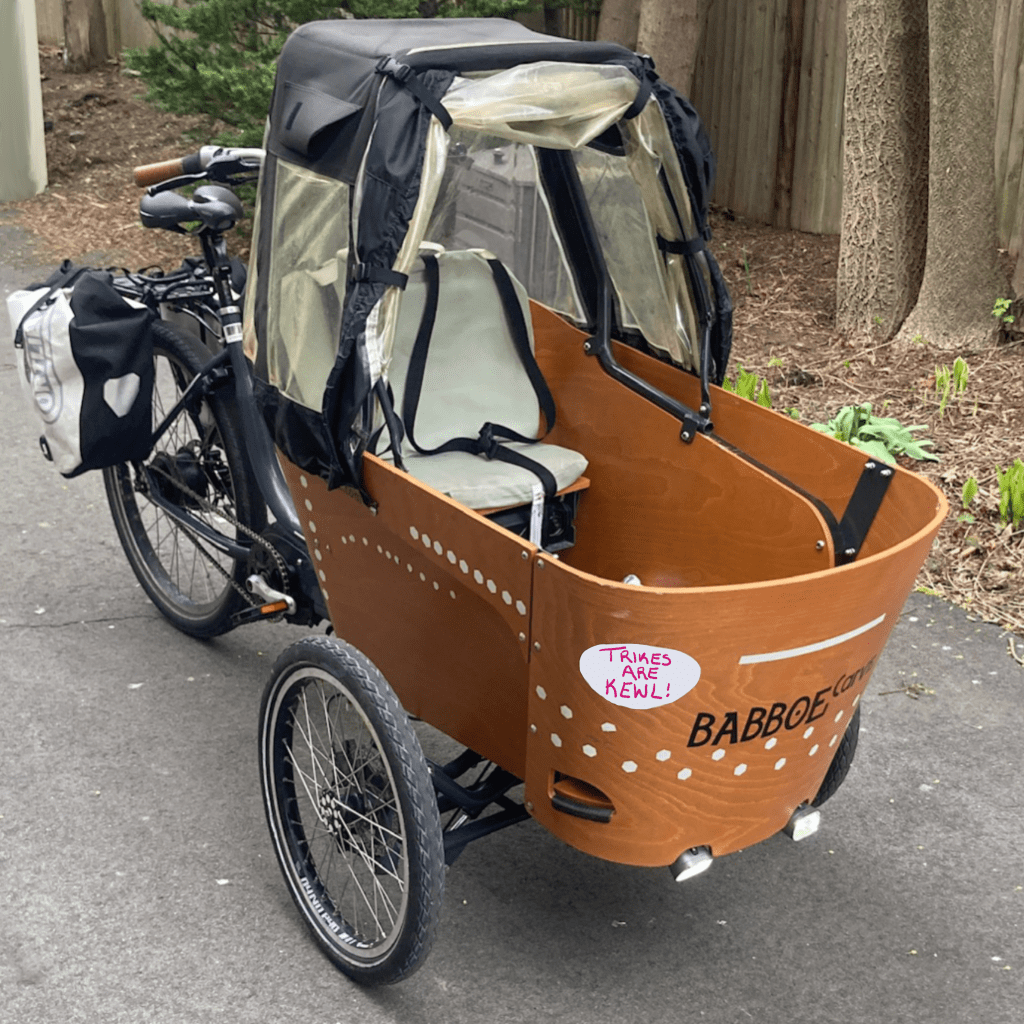
Perhaps my most controversial take, but I don’t think it’s worth it for (most) people to get a tilting trike. If you’re doing deliveries and need to go fast, sure, go for it. But for most people carrying kids, the tilt feature negates a lot of the pros on my list (tilting trikes need to use a kickstand after you dismount, you can’t just sit on them when you’re stopped without balancing the load, etc). The biggest critique of trikes is that you have to go slow in your turns. I regularly took turns safely at about 12mph, and my average mph on my trike and longtail was only 1-2mph different. If you want the features of a tilting trike I think you should get a bakfiets.
My bike, the Babboe Carve, had the option to tilt or lock upright, I almost never used the tilt feature. It wasn’t worth it to me to go slightly faster when taking a turn because that benefit was marginal compared to all that I mentioned that you can do when you’re on an upright bike with three wheels.
I know there are titling trike fans! I’m so glad people like their bikes. This is just my opinion as someone who had a bike that could tilt and not tilt. I’m a not tilting kinda gal.
Final Trike Thoughts
I think trikes can be a good match for a lot of individuals and families. If you live in a hilly area, I definitely recommend trying the brand you’re interested in to see if the motor can keep up with your needs. It’s very hard to get trikes in the US, and I have only had experience with the Babboe Carve Mountain which has independent steering (as opposed to Bunch and Christiana where you turn the whole box). I hope I can try out that type of trike in the near future. If you’re cruising on the flat lands of the prairie, this could be the bike for you (or if you can soup one up with a more powerful motor if you’re in a hilly location). Before buying your bike, specifically if you’re buying it used or direct-to-consumer, find out which local bike shop will service your bike. Make sure you show them a picture/share dimensions. I’ve been in situations where I called in advance, was given the ok, but then the attitude changed once they saw it in person.
Trikes brands available in the US you to consider:
Standard trikes (Steering mechanism is attached to the box so you have to move the whole box to steer)) — tend to be on the lower end of the trike price spectrum: Christiana, Bunch, Ferla, Winther
Trikes that steer independently (handles move independent of the box): Nihola, Butchers and Bicycles
Rear steering: Black Iron Horse
Midtails & Longtails
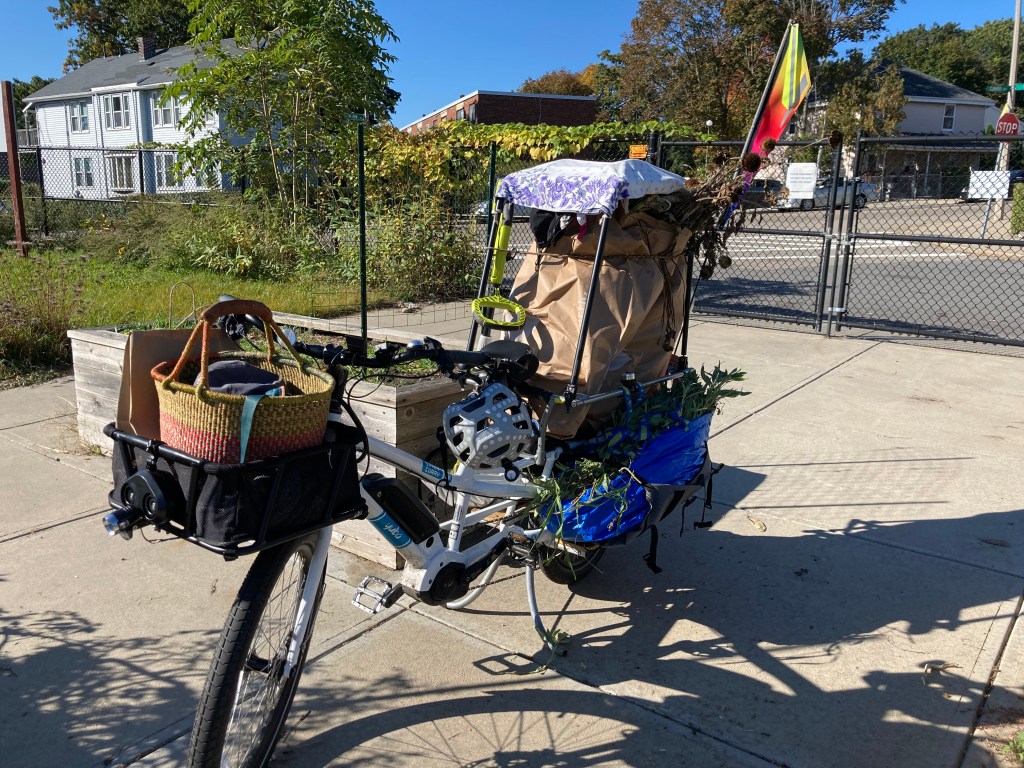
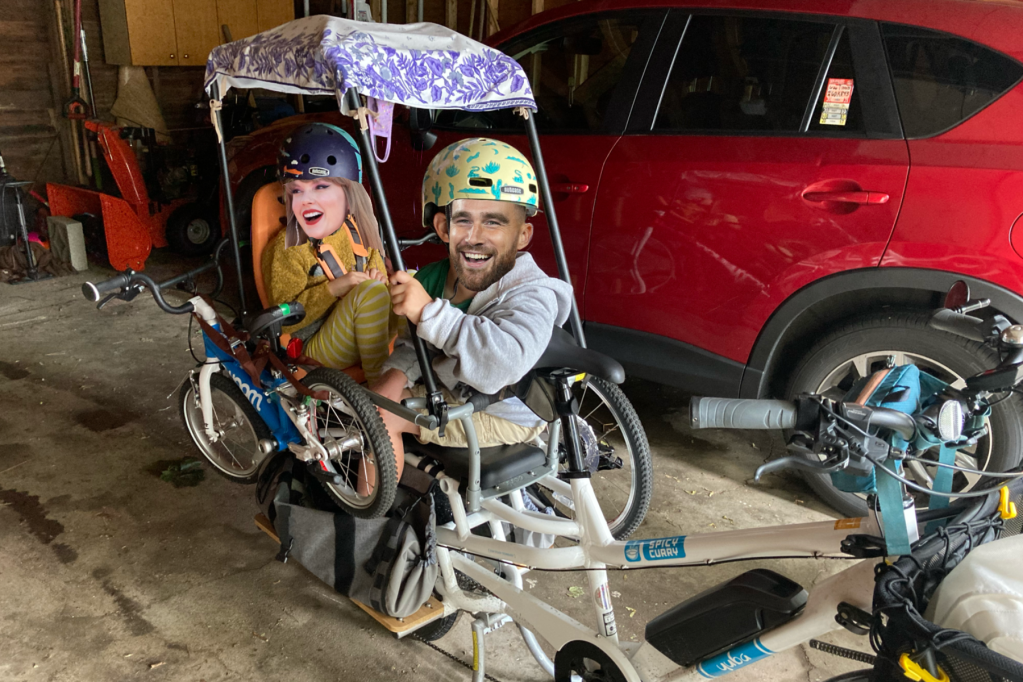
Longtails are bikes that carry most of the load and passengers behind the rider on an extended tail. I had a Yuba Spicy Curry and it could handle the load of my two kids easily. Of all my bikes it got the best range and had the most power.

Pros
-Lightest of the three, easiest to get over curbs (while it was the easiest of the three, it’s still a heavy bike and it was never easy to get it over a curb).
-Cheapest of the kid-carrying variety (unless you go with a trailer)
-Easiest to get serviced at a bike shop (bike has the smallest footprint, I got fewer side eyes when I came in with a longtail).
-Nothing in front of you so when you’re peering to see if it’s safe to cross you don’t have to put your kids/cargo out ahead of you. Also generally easier to push walk buttons at cross walks.
Cons
-Kids are more exposed in the event of tipping/collision. I’ve tipped the kids three times on a long tail. Once because I didn’t set the kickstand on level ground and the other too because we weren’t well balanced at a standstill.
-Harder to communicate with kids/keep an eye on them
-Even with a smaller wheel rear wheel on the Yuba Spicy Curry, I found the bike to be tippy once both kids were out of their Yepp Maxi seats. I was able to manage ok but I imagine this would’ve been very cumbersome for a shorter rider (I’m nearly 5’8”)
-Possible to get accessories to enclose the tail to protect kids from the elements, but not as many brands provide these accessories so you may need to get creative/use products from other companies
-Kids riding on the back will inevitably drop things and they fall in the road/are lost.
-Less space for storing cargo and whatever cargo you do bring usually takes more ingenuity with straps to tie down
-Easier to store at home, especially if you need to get it inside your house.
Final Mid/Longtail Thoughts:
My longtail was my second bike. The geometry wasn’t a great fit for me (I was leaning too far forward and had pretty severe wrist pain). I did do some attempts at getting a more upright riding style, but in that process I had bought an Urban Arrow and decided to sell the Spicy Curry. Having had a bike with a box in the past, I found it more versatile for my needs with kids and cargo, and I found the weight low in the box more stable than on the tail of the bike. I thought the Spicy Curry had great power with a Bosch motor and all hills were easy to tackle, even with two kids on the back.

An Aventon Abound I borrowed for a week from the Camberville E-Bike Lending Library
Longtails are very popular in the US. These are the brands that I see the most that folks have a good experience with (generally listed from least to most expensive).
Aventon, Blix, Benno, Tern (HSD, GSD Orox), Xtracycle (Swoop, Stoker, RFA), Yuba (FastRack, Kombi, Spicy Curry, Mundo), Riese and Muller (Multicharger, Multitinker).
Of that list I like Tern the best (though I’ve never owned one!). It has an upright riding style, smaller back wheel, and the bike AND accessories are high quality. You can mix and match some accessories on other bikes (for example, I know for certain that the Tern Pop Top fits on the Spicy Curry and Aventon Abound)
Box Bikes (Remember, they’re really called Bakfiets)
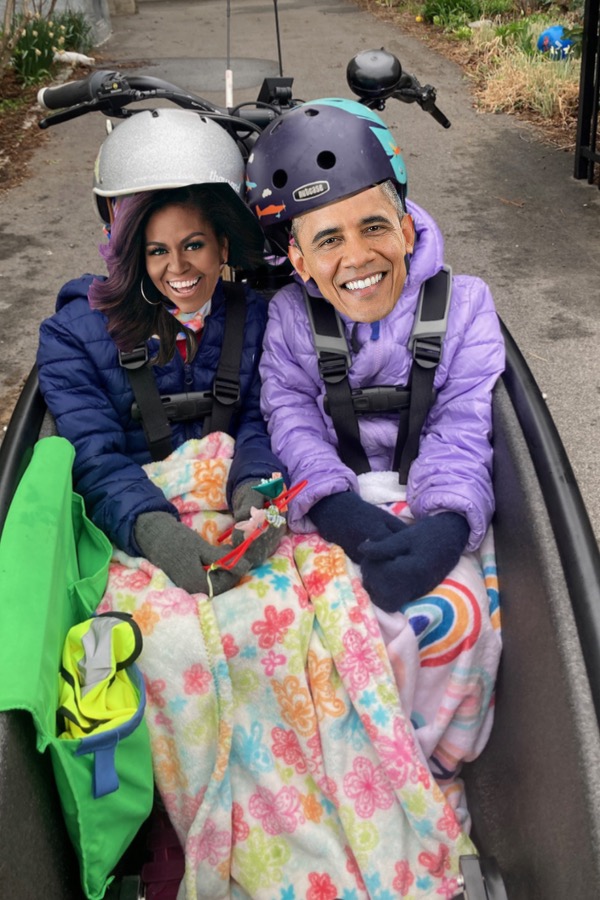
An analogue Workcycles Kr8 was the first cargo bike I ever rode and I hated it (I had not yet learned the 80 mile rule!). I’ve now come full circle and am back to a bakfiets as my bike and it’s great at fulfilling our needs as a two-kid family.
Box Bike Pros
-Can start biking with infants when they’re still in a car seat
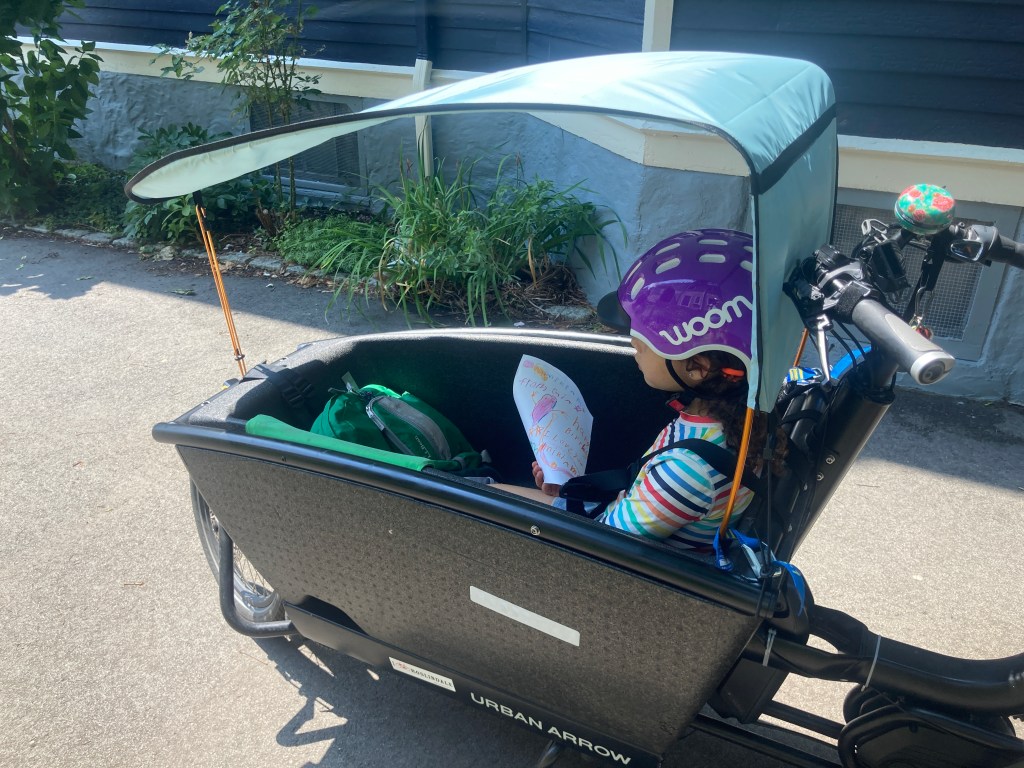
-Kids are fully enclosed and can be protected from the elements. All box bike brands that I know of offer rain canopies (unlike longtails which are harder to accessorize).
-Easier to carry kids AND cargo at the same time. You can outfit panniers or Tow Monsters for carrying cargo separately from the kids.
-My kids find the bakfiets riding experience to be more comfortable than on the back of the longtail
-Though they seem wide, bakfets are typically the same width as the handlebars, so you don’t need to worry about fitting in doorways.

Box Bike Cons
-More of a learning curve than a longtail. Remember the 80 mile rule!
-Box bikes are heavy and big — if you need to transport it to a shop for service (and it’s not rideable), that is not an easy endeavor for most people.
-The most expensive of the three kid-carrying cargo bikes. Prices can go up to $12,000+ on the high end.
Box Bike Takeaways
I really love riding an Urban Arrow — its straightforward to ride it year round in nearly all types of weather (the only times I’ve chosen not to bike have been when it’s very windy or when there’s lightning). My children are 6 and 7, both on the tall end for their ages, and still fit comfortably side by side on the bench. I feel very safe maneuvering the bike in the city and I think that it’s the most versatile bike of the three options for people who want to reduce their car trips.
I have the Cargo Line motor with more torque, but I do think the Bosch motor is a bit weak for the hauling potential of the bike. My children are about 110 lbs combined and I find myself struggling on some hills now. If the motor were a bit stronger, and/or if I had more gearing range than the installed Enviolo hub allows, I’d be in a great situation. As is, it suits my needs 95% of the time, so I’m still pretty happy.



 Cargo Bike Chronicles
Leave a reply to I Just Bought a Longtail Cargo Bike — Now What? – Cargo Bike Chronicles Cancel reply